If you run Point-of-Care Testing in an NHS trust, a private GP clinic, or a longevity centre in the UK, here is the uncomfortable truth: CQC inspectors have quietly tightened how they scrutinise POCT since 2024.
Across audits I’ve supported over the last 18 months, the same seven failure points come up again and again. None of them are exotic. All of them are fixable in days, not months. But every one of them has cost a service its “Good” rating — and in two cases I’ve seen, triggered a Section 31 warning notice.
This is the field-tested checklist I wish every UK POCT lead had read before their first CQC inspection.
TL;DR · for the people who scroll first
The 7 mistakes — TL;DR
1. No documented POCT scope.
2. Operator competency records that don’t survive an audit.
3. QC drift nobody notices.
4. Skipping EQA — or running it without review.
5. SOPs that don’t match what’s actually happening on the ward.
6. Connectivity blind spots and silent manual transcription.
7. No POCT governance committee and no senior accountability.
Mistake 1. No documented POCT scope
What CQC inspectors actually look for
CQC inspectors open with deceptively simple questions: “Which tests are POCT here? Where, on which devices, by whom?” Services routinely fail this question. They have analysers in clinic rooms that aren’t on any register, doctors running CRP machines that were never formally adopted, and finger-prick HbA1c devices bought on a clinical lead’s P-card with no governance sign-off.
The fix
Maintain a single POCT scope register — one row per device per location. Capture: analyte, device model and serial, operator group authorised to use it, IFU version, SOP version, QC frequency, EQA scheme, and the date of last governance review. Print it. Bring it to the inspection. Inspectors visibly relax when this exists.
Mistake 2. Operator competency records that don’t survive an audit
What CQC inspectors actually look for
A pile of A4 forms in a folder is not a competency framework. Inspectors will pull names at random and ask to see initial assessment, observed practice, knowledge check, re-assessment dates, and the supervisor sign-off chain. Missing signatures, undated forms, and “we trained them in induction” are the three failures that come up every time.
The fix
Move competency records to a single digital record per operator with: who trained them, on which device, on what date, when they were last reassessed, and when their next reassessment is due. Annual reassessment is the practical floor — many UK Trusts now require 6-monthly for high-risk POCT (e.g. blood gas, troponin). The Institute of Biomedical Science (IBMS) framework is a good reference point for structure.
Mistake 3. QC drift nobody notices
What CQC inspectors actually look for
Inspectors don’t just want to see that QC was run — they want to see what happened when it drifted. Where are the Levey-Jennings charts? When the +2SD warning fired three times in a month, who made the call? Where’s the escalation note? “We ran the controls daily” is necessary, not sufficient.
The fix
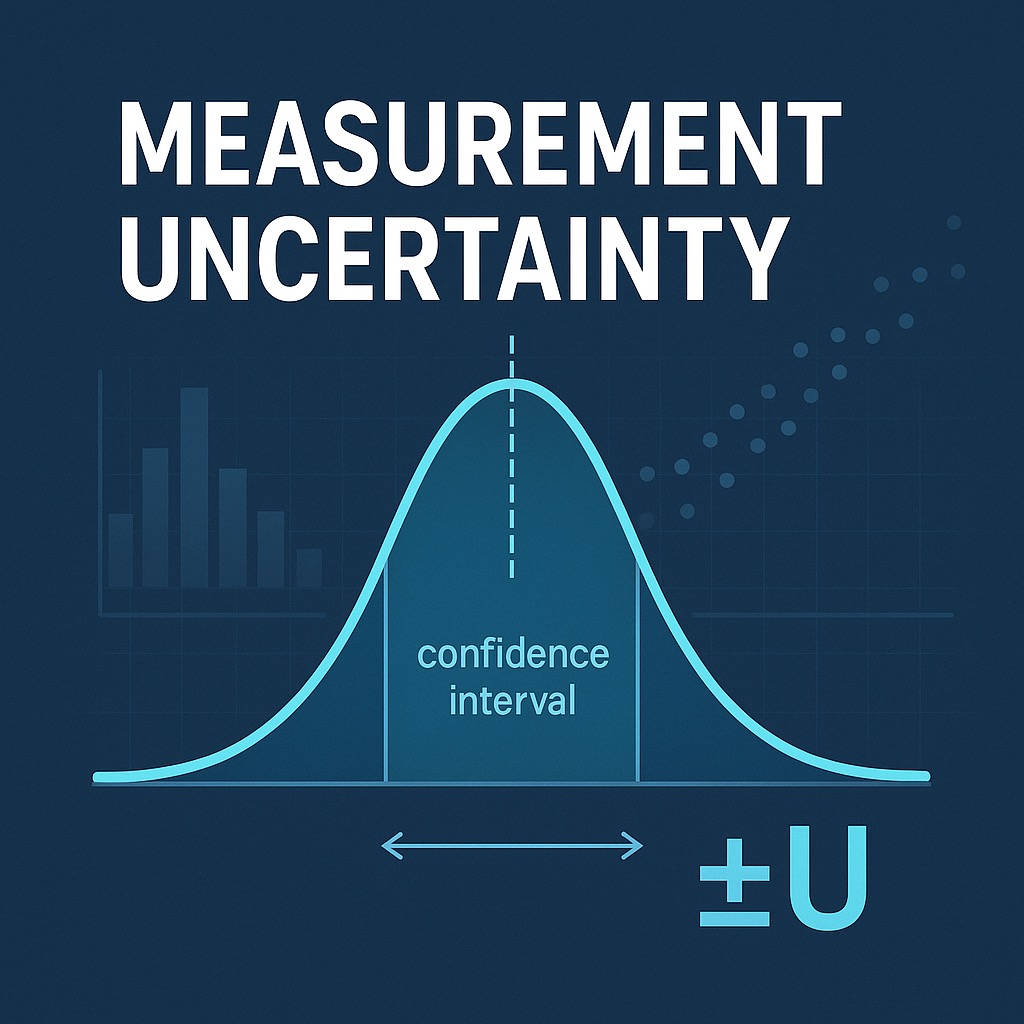
For every device, maintain a Levey-Jennings chart or equivalent run chart with documented Westgard-style rules (e.g. 13s, 22s, 41s). Document escalation: who reviews flagged QC, what action was taken, and how the device was returned to service. If you don’t calculate measurement uncertainty from these logs, that’s your next gap.
Mistake 4. Skipping EQA — or running it without review
What CQC inspectors actually look for
External Quality Assessment is non-negotiable for any analyte where a scheme exists in the UK — UK NEQAS, WEQAS, RIQAS, LabQuality. Inspectors will check enrolment status against your scope register, and will then ask: “What happened when you got a flagged or unacceptable result?” Services often enrol, run the samples, and never review the report.
The fix
Set a documented EQA review cycle per device. Every scheme report should be: opened within 5 working days, reviewed and signed by the POCT lead, actioned if any analyte is flagged, and minuted at the POCT governance committee. The reports are useless if they’re sitting unopened in an Outlook folder.
Mistake 5. SOPs that don’t match what’s actually happening on the ward
What CQC inspectors actually look for
The SOP says cassette type A. The fridge contains cassette type B. The nurse uses whatever is there. Inspectors notice this within minutes. Out-of-date SOPs, SOPs referencing decommissioned devices, and SOPs that no operator on shift has read are routinely cited.
The fix
Each SOP must have: a version number, an issue date, a review date (annual minimum), a named author, and a named approver. When you change device, vendor, lot, or reagent — the SOP changes before the practice changes. Quarterly walkround: pick 3 SOPs at random and verify the ward is doing what the SOP says.
Mistake 6. Connectivity blind spots and silent manual transcription
What CQC inspectors actually look for
Inspectors increasingly ask about data flow: “When this device produces a result, where does it go? Who sees it? How is it tied to a patient record? What happens if it’s critical and the operator forgets?” Services that rely on manual transcription, paper logs, or unmonitored spreadsheets get marked down on Safe and Effective.
The fix
Map the data flow for every analyte: device → middleware (or interface, if direct) → LIS → EPR. UK middleware platforms inspectors will recognise include Radiometer AQURE, Roche cobas IT 1000, Siemens UniPOC/POCcelerator, Abbott AegisPOC and Werfen GEMweb. Where connectivity isn’t possible, document the manual workflow and the safeguard for critical results — and review it. Don’t leave the workflow undocumented and unowned.
Mistake 7. No POCT governance committee and no senior accountability
What CQC inspectors actually look for
A single POCT lead — however competent — is not a governance structure. Inspectors look for evidence of multi-disciplinary oversight: pathology, nursing, clinical lead, infection prevention, IT/digital, procurement. Terms of reference, attendance records, minuted decisions. A lone POCT coordinator with no senior sign-off is a finding waiting to happen.
The fix
Stand up a POCT governance committee with named members and quarterly meetings minimum. Standing agenda: scope register changes, QC and EQA exceptions, training compliance, incident reports, horizon-scanning for new devices. Senior clinical sign-off (usually Medical Director or Clinical Lead for Pathology) on the annual POCT report is the artefact CQC wants to see.
How CQC scores POCT
How CQC maps these to its 5 Key Lines of Enquiry
Safe — competency, QC/EQA, SOP currency, escalation of critical results. (Mistakes 2, 3, 4, 6)
Effective — devices fit for clinical purpose, evidence-based practice, results acted upon. (Mistakes 1, 4, 6)
Caring — operator confidence, patient communication around POCT results.
Responsive — POCT scope matches clinical demand, turnaround appropriate.
Well-led — governance committee, accountability chain, learning from incidents. (Mistakes 1, 7)
The 30-minute pre-inspection check
If a CQC visit was announced for next week, run this checklist tomorrow morning. The whole thing takes half an hour and will surface 80% of what an inspector would find.
| Area | Quick check | Evidence to have on the day |
|---|---|---|
| Scope register | Does every device in clinical areas appear on it? | Current register, dated |
| Competency | Pull 3 operator names — show full training record | Per-operator digital file |
| QC | Last 30 days of Levey-Jennings or equivalent | Run chart + escalation log |
| EQA | Last 3 reports per scheme, reviewed and signed | Signed reports + committee minute |
| SOPs | 3 random — do they match what the ward does? | Version-controlled SOP register |
| Connectivity | Data flow diagram per analyte | Documented flow + manual safeguards |
| Governance | Last 4 quarterly committee minutes | Terms of reference + minutes |
Frequently asked questions about CQC and POCT
Does CQC inspect Point-of-Care Testing specifically?
CQC does not run a separate POCT inspection regime. POCT is examined within the standard Key Lines of Enquiry framework — Safe, Effective, Caring, Responsive, Well-led — when CQC inspects a regulated service that performs diagnostic testing. In practice, this means any NHS trust, GP practice, private clinic, urgent care provider, or independent diagnostic centre running POCT is in scope.
Who is responsible for POCT in a CQC inspection?
Accountability sits with the registered manager and the nominated individual on the CQC registration. Operationally, a designated POCT lead — typically a biomedical scientist or senior clinical practitioner — owns the day-to-day governance. Inspectors expect both roles to be clearly named and for senior clinical leadership (Medical Director or Clinical Lead for Pathology) to sign off the annual POCT report.
What standards does CQC reference for POCT?
CQC does not directly accredit to a standard, but inspectors reference ISO 15189:2022 (medical laboratories), MHRA guidance for in vitro diagnostic devices, and increasingly the IBMS POCT competency framework. Where a service is also UKAS-accredited, CQC will cross-reference UKAS assessment findings. Read our ISO 15189:2022 implementation guide.
How often does CQC inspect POCT services?
Inspection frequency follows the host service’s regulatory rating. Services rated “Good” or “Outstanding” are typically inspected every 2–5 years; “Requires Improvement” or “Inadequate” trigger more frequent visits. POCT is reviewed within every inspection of a diagnostic-bearing service, regardless of cycle.
What happens if POCT fails a CQC inspection?
Findings range from informal recommendations on the inspection report through to formal action: requirement notices, warning notices, conditions on registration, and in serious cases Section 31 urgent action to suspend or limit a service. Even at the “minor recommendation” level, a POCT finding sits on the public CQC report and follows the service through reputational and commissioning conversations.
Does this apply to private clinics and longevity centres, not just the NHS?
Yes. Any UK provider performing regulated activities — including diagnostic and screening procedures — needs to be CQC registered. Private GP practices, longevity clinics, men’s health services, and walk-in diagnostic centres are all in scope, and the seven mistakes in this article apply identically.
Preparing for a CQC inspection?
POCTIFY supports NHS trusts and private clinics across the UK with POCT scope reviews, audit-readiness packages, SOP refreshes and governance frameworks. If you have an inspection coming up, get in touch.