You have a supplier demo next week and a catalogue full of names that all sound the same. One brochure says “blood gas analyser”, the next promises a “biosensor platform”, a third sells an “all-in-one POCT device”, and none of them tell you in plain words what the machine is for or whether it suits your clinic. Choosing the wrong one is expensive. You can spend thousands on a device that runs the wrong panel, sits idle most weeks, or buries staff in single-use cartridges you rarely need.
This guide sorts the main types of point-of-care analysers a different way. Instead of grouping point-of-care testing devices by manufacturer, it groups them by the clinical job you are trying to do, then shows the two physical shapes those machines come in. By the end you should be able to place your own clinic in the right row of a single table and walk into that supplier conversation knowing which questions to ask.
Two shapes before five jobs
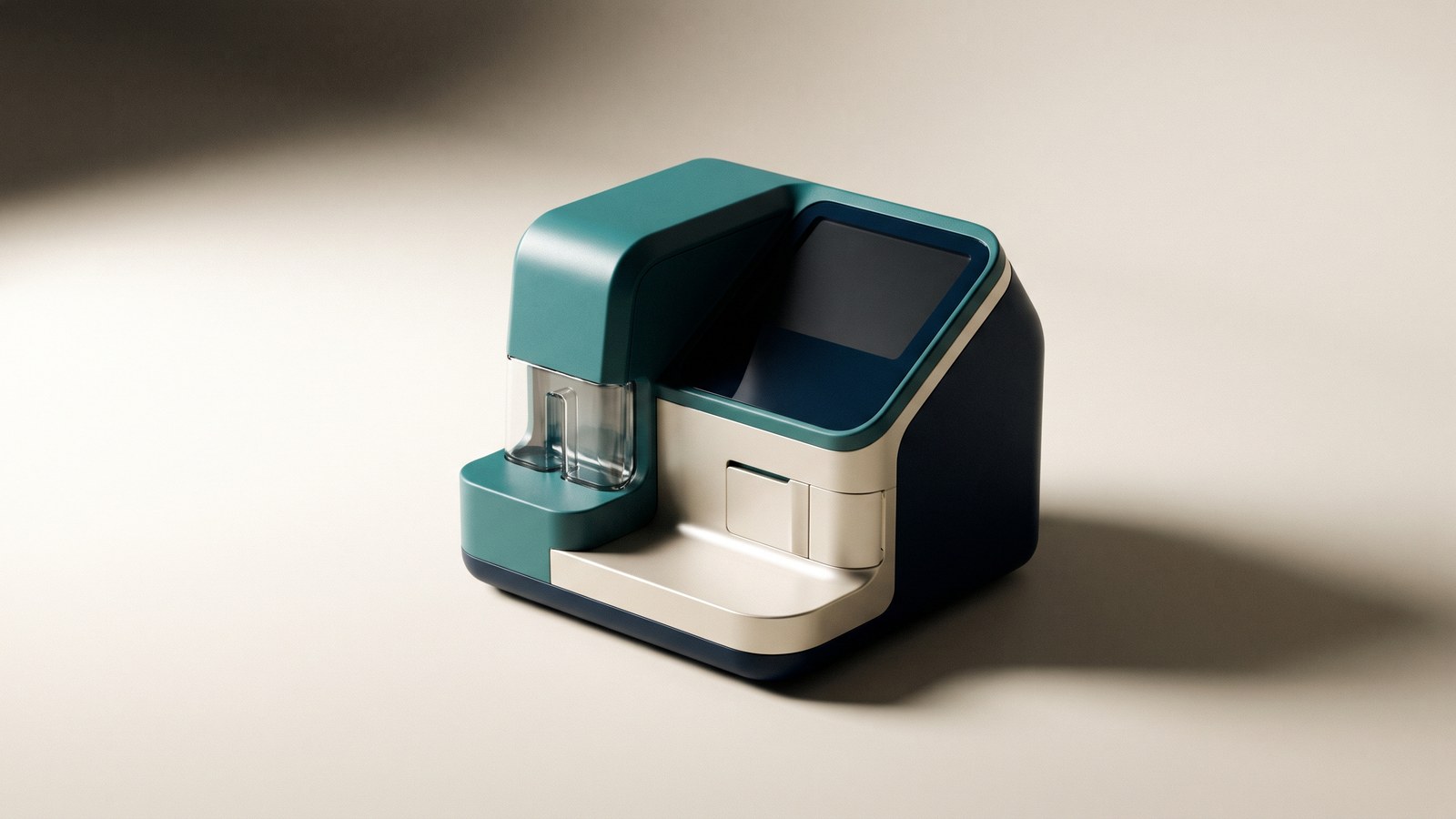
Almost every point-of-care analyser is one of two shapes. Knowing which you are looking at tells you most of what you need about cost, maintenance and throughput before anyone mentions a single measurand.
Handheld cartridge analysers
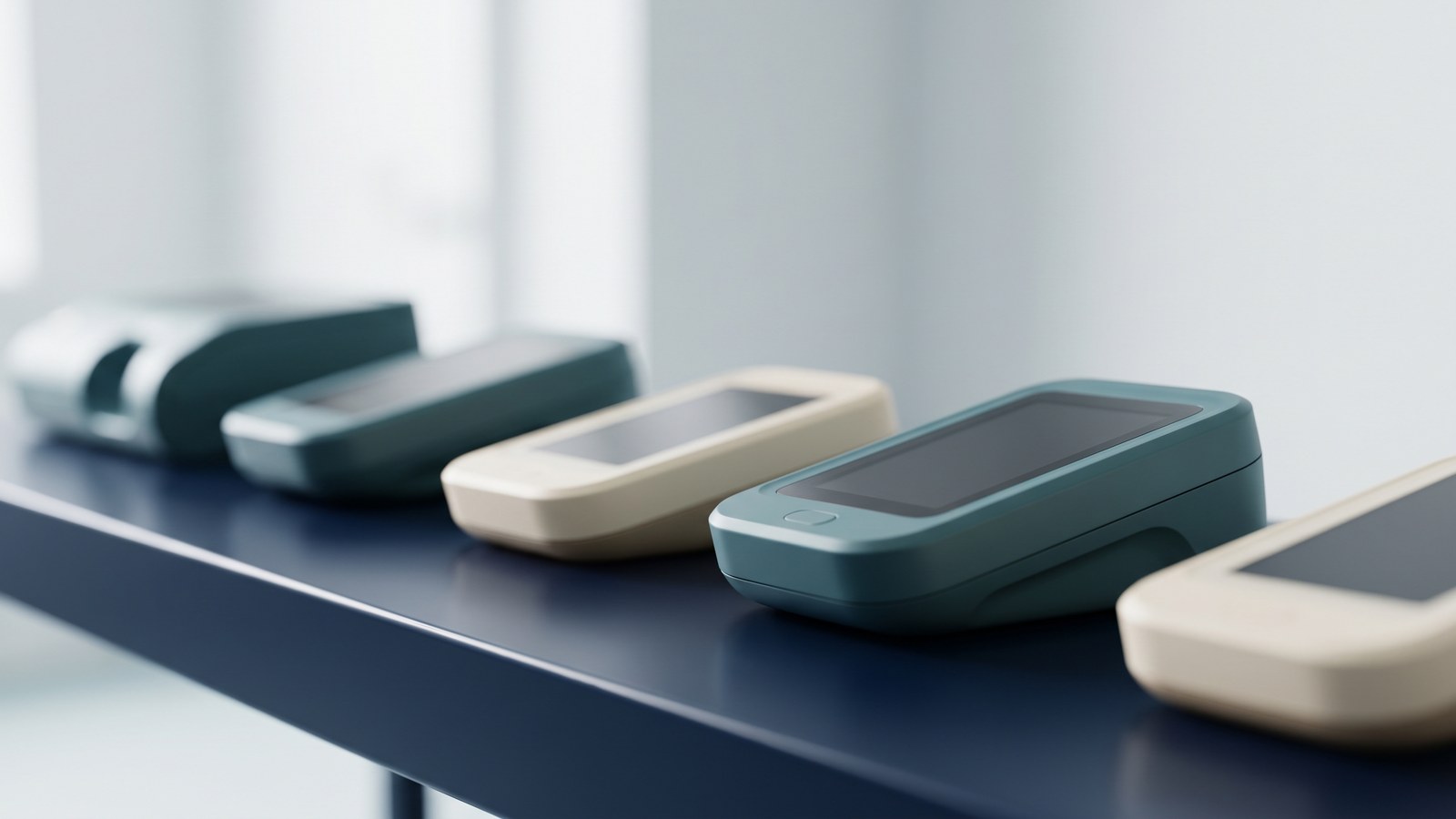
These run from pocket-sized to lunchbox-sized, often on a battery or a small dock. A single-use cartridge or test strip holds the chemistry. You add a drop of whole blood, usually a fingerstick or a small venous sample, and read a result in roughly 1 to 10 minutes. There is no daily calibration to perform. Quality control runs per lot or on a set device schedule.
The trade-off is a higher cost per test in exchange for a near-zero footprint. That makes handhelds ideal at the bedside, in a side room, in a pharmacy consultation or on a home visit. Typical jobs include blood gases, a basic electrolyte set, lactate, INR, glucose, C-reactive protein and cardiac markers.
Benchtop biosensor analysers
These sit on a counter, run on mains power and weigh several kilograms. They draw sample from reagent packs, cartridges or spinning rotors, and many run a broader panel in one pass. Throughput is higher and the cost per test falls once volume rises, but they need scheduled maintenance, periodic calibration and a documented quality-control routine.
Typical jobs include full chemistry panels, HbA1c, coagulation, immunoassays and automated urine strip reading.
A simple rule of thumb: handheld suits low-volume, urgent, point-of-need testing. Benchtop earns its place when you run the same panel many times a day and want the lowest per-test cost.
The five types of point-of-care analysers, by clinical job
Sort by the job first, and the shopping list gets much shorter.
1. Critical care and blood gas panels
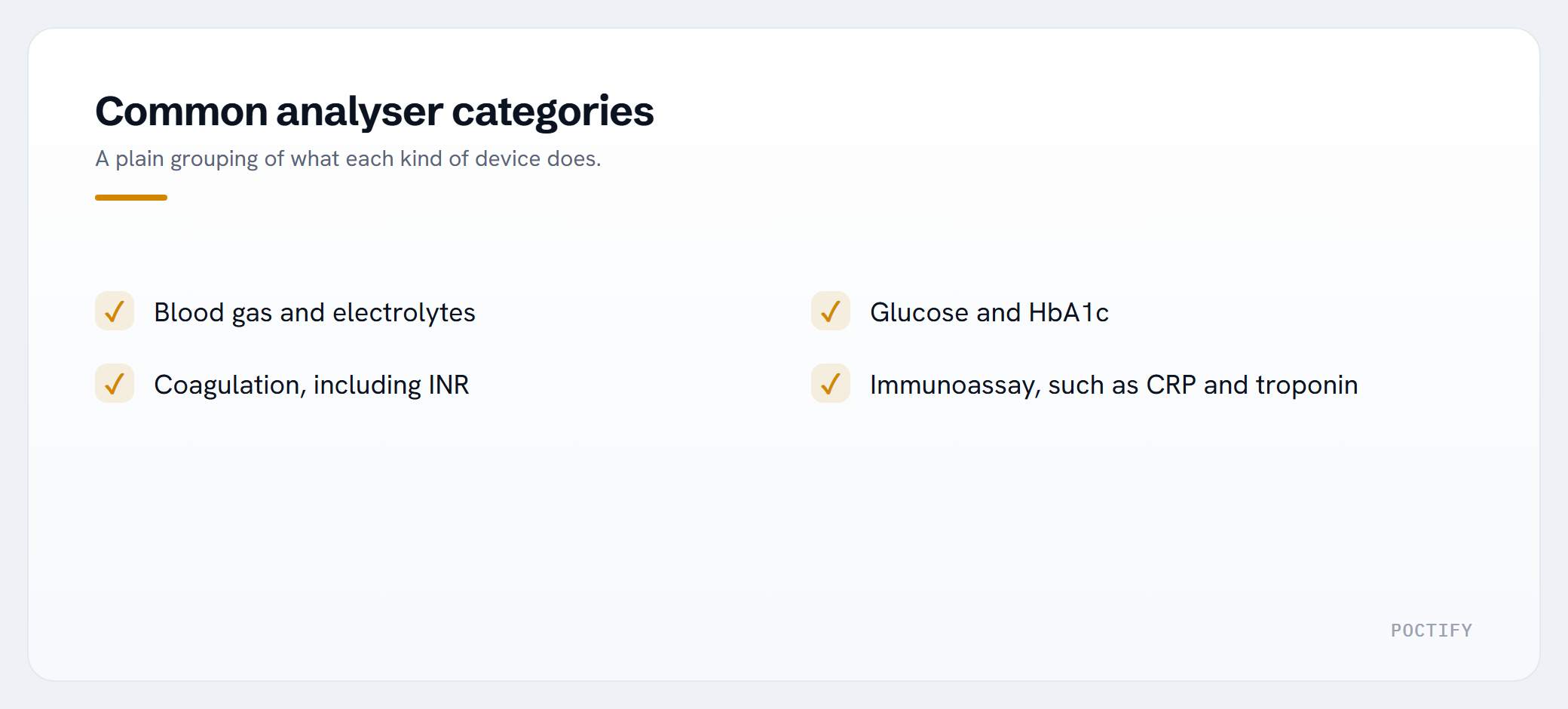
A blood gas analyser measures pH, oxygen and carbon dioxide, and usually adds electrolytes such as sodium, potassium and chloride, plus ionised calcium, glucose, haemoglobin and lactate. Turnaround is fast, often 60 to 120 seconds, and speed is the whole point: these results inform urgent, same-day assessment. Both shapes exist here, a handheld cartridge unit for a single bedside or a benchtop model for a busy urgent-care floor.
2. Diabetes monitoring
Two different machines do two different things. A handheld glucose meter gives an immediate blood sugar from a fingerstick. A benchtop HbA1c analyser reports average glucose control over the previous two to three months, and that is the device you want for diagnosis and review clinics. Many practices run both: the meter for the room, the HbA1c analyser for the clinic session.
3. Anticoagulation (INR)
Patients on warfarin need their clotting time checked so their dose can be adjusted. A handheld coagulation meter reads INR, the standardised version of the prothrombin time, from a fingerstick in about a minute. That lets an anticoagulation clinic or community pharmacy test and adjust in a single visit rather than sending bloods away and waiting.
4. Infection triage
When you need a quick steer on whether an illness is likely bacterial, a CRP analyser reports a C-reactive protein level in a few minutes and supports more careful antibiotic decisions. Small benchtop and handheld versions both exist. The same triage category covers rapid antigen and molecular analysers for targets such as influenza, RSV, strep and respiratory viruses.
5. Urinalysis
An automated urine chemistry analyser reads reagent strips consistently for protein, glucose, ketones, blood, leukocytes and nitrites, removing the guesswork of reading a strip by eye against a colour chart. These are benchtop, low cost per test, and common in general practice, antenatal care and occupational health.
Which analyser for which clinic
Find the row closest to your setting. The point is orientation, not a fixed prescription, since many clinics span two jobs.
| Clinic setting | Main clinical job | Usual shape | Typical measurands | |—|—|—|—| | Urgent care or same-day assessment | Critical-care panel | Handheld cartridge or benchtop blood gas | pH, electrolytes, lactate, glucose | | GP practice or diabetes review | Diabetes monitoring | Benchtop HbA1c plus handheld glucose meter | HbA1c, glucose | | Anticoagulation clinic or pharmacy | INR monitoring | Handheld coagulation meter | INR (prothrombin time) | | Walk-in or minor-illness clinic | Infection triage | Handheld or small benchtop | CRP, rapid antigen or molecular targets | | General practice, antenatal, occupational health | Urinalysis | Benchtop strip reader | Protein, glucose, leukocytes, nitrites |
If your clinic appears in two rows, that is normal. A busy GP practice might run a benchtop HbA1c analyser, a handheld CRP unit and a urine strip reader side by side. The table simply stops you buying a critical-care blood gas analyser when what you actually need is reliable diabetes review.
The part the brochure skips: capturing and governing every result
A point-of-care analyser only produces a number. The value lands when that number reaches the patient record reliably, carries the operator and quality-control context that proves it is trustworthy, and can be found again later. A result that lives only on a device screen or a printed slip is easy to mis-transcribe, hard to trace, and invisible to anyone reviewing care or preparing for an inspection.
This is where quality standards matter. ISO 15189:2022 sets out, in broad terms, the quality-management and competence expectations for medical laboratories, and it brings point-of-care testing within that scope. It does not tell you which analyser to buy. It does expect you to show that each result is controlled, traceable to a competent operator and backed by documented quality control. For the exact requirements, read the official standard rather than relying on any summary, including this one.
In practice, that means weighing three things alongside the device itself: how results are captured without manual re-typing, how quality control and operator competence are recorded, and how you retrieve a given result months later. The most workable approach is software that works with the devices and systems you already use, so a new analyser adds to your existing record-keeping instead of spinning up a parallel paper trail that someone has to reconcile by hand.
Buying the right machine solves half the problem. Governing what it produces solves the other half, and it is the half most supplier demos quietly skip.
A two-minute self-sort
- Name the job first. Critical-care panel, diabetes, anticoagulation, infection triage or urinalysis? Pick one to lead with.
- Pick the shape. Low volume and point-of-need points to a handheld cartridge device. Repeated daily panels point to a benchtop biosensor analyser.
- Check the measurands. Confirm the device reports exactly the analytes you need and nothing you will never run. Our Analyte Explorer breaks down individual analytes such as lactate, HbA1c and CRP in plain language so you can match the panel to the patients you actually see.
- Ask about the result, not just the test. Before you sign anything, ask how each result is captured, governed and retrievable, not only how fast the machine spits out a number.
Work through those four steps and a confusing catalogue collapses into a shortlist of two or three devices you can compare on price, throughput and running cost.
This article is for educational and operational guidance only and is not medical advice.
Talk it through with POCTIFY
Working out which analysers fit your clinic, and making sure every result they produce is captured and governed rather than stranded on a device, is exactly the kind of problem we help clinics solve every week. Talk to POCTIFY for tailored, plain-English support. No pressure, no jargon, just a clear view of the options before you commit.
Frequently asked questions
What is the difference between a handheld and a benchtop point-of-care analyser?
A handheld analyser uses single-use cartridges or strips, runs on a battery or small dock, and gives a result from a drop of whole blood in roughly 1 to 10 minutes. It suits low-volume, point-of-need testing at the bedside or in a side room. A benchtop biosensor analyser sits on a counter, runs broader panels at higher throughput and a lower cost per test once volume rises, but needs scheduled maintenance, calibration and documented quality control.
What does a blood gas analyser measure?
A blood gas analyser typically reports pH, oxygen and carbon dioxide, and usually adds electrolytes such as sodium, potassium and chloride, plus ionised calcium, glucose, haemoglobin and lactate. Turnaround is often 60 to 120 seconds, which is why these devices are used for urgent, same-day assessment rather than routine review.
Do I need separate machines for HbA1c and glucose?
Usually yes, because they answer different questions. A handheld glucose meter gives an immediate blood sugar from a fingerstick. A benchtop HbA1c analyser reports average control over the previous two to three months and is the device used for diagnosis and review clinics. Many practices run both side by side.
Which point-of-care analyser is best for a small GP practice?
It depends on the jobs you do most. A small practice often combines a benchtop HbA1c analyser for diabetes review, a handheld or small benchtop CRP unit for infection triage, and a benchtop urine strip reader. Name your top one or two clinical jobs first, then choose the shape and panel that match, rather than buying a single device that tries to do everything.
Are point-of-care results as reliable as a central laboratory?
Point-of-care analysers can give clinically useful results quickly, but reliability depends on running and recording quality control, keeping operators competent, and capturing each result with its context. Standards such as ISO 15189:2022 describe these expectations for point-of-care testing. Consult the official standard for the exact requirements and treat strong governance as part of the purchase, not an afterthought.